
Zero Harm System
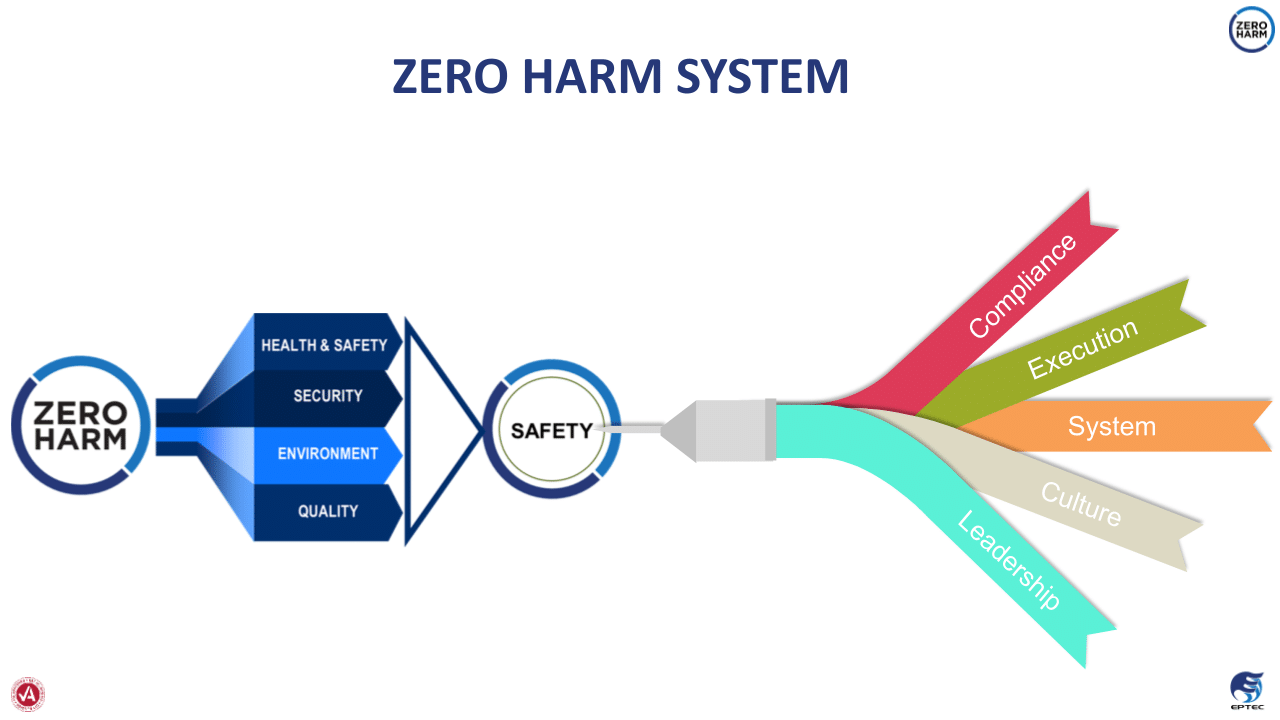
Leadership
We will now provide detail of the important contents for each element, commencing with Leadership. This element is based on our coaching and mentoring approach, values and belief, supported by
- Strategic planning
- HSSEQ Foci
- Integrated system and people Journey
- People, environment and asset foundation
- Cardinal rules and leading by example

Culture
Our second WTS system element is culture Safety culture, it refers to our shared attitudes, values, and beliefs regarding safety. The three key aspects are:
Psychological aspects: How individuals and groups feel about safety.
Behavioural aspects: The safety-related actions and behaviours of employees.
Situational aspects: The health and safety policies, procedures, and management structures in place.
For this system element we will focus on and elaborate on:
- Visible Felt Leadership
- Blame Culture
- Safety Drift, Observations, Planned Task Observations and our journey results
- The five why’s of Zero Harm and
- The Bradley Curve and growth culture
System
Our Safety Management System is a structured, organization-wide approach to managing safety risks in the workplace. It involves a set of policies, procedures, and practices designed to proactively identify hazards, assess risks, and implement controls to prevent accidents, injuries, and illnesses. Essentially, it’s a framework that integrates safety into all aspects of our operations.
In our System element we will elaborate on:
HSSEQ System:
- Client Alignment
- HIRAC
- Training / Chemicals / Subbies
- Management Plan / Plant Register
- Review & Implement
Summary
- Planning
- Field execution
- Due Diligence
Psychosocial Compliance
Execution
We have defined our Values and safety beliefs and commitment to safety and outlined leadership commitments and our culture as the first two system elements and foundation of our Zero Harm pyramid, supported by a rigid system meeting Federal safety commissioner and ISO45001 standards.
We must now proactively identify potential hazards in the workplace and assess the associated risks. Implement measures to eliminate or control identified hazards and risks personal protective equipment.
In our Execution element we will elaborate on:
Zero Harm Defences
- Training & Competency
- Incident Management
- Competency Measurement
- Operational Discipline
- Communication & Consultation
- Obligations & Duties
- Environmental & Social Governance (ESG), Quality and Security
Compliance
With reference to different audits listed in the system element, our safety compliance measurement and auditing involves systematically evaluating adherence to safety regulations standards and our system, to identify areas for improvement and ensure a safe and compliant working environment. This is important to meet legal requirements, prevent accidents, and foster a culture of safety.
In this section we will elaborate on:
Zero Harm Defences:
- Training & Competency
- Incident Management
- Competency Measurement
- Operational Discipline
- Communication & Consultation
- Obligations & Duties
- ESG / Quality / Security